Wharf to Final Table: Anatomy of a Signature Night
Sixteen people work for two days so a hundred and sixty guests never notice the machinery. This is what a Signature evening looks like from the crew's side of the felt.
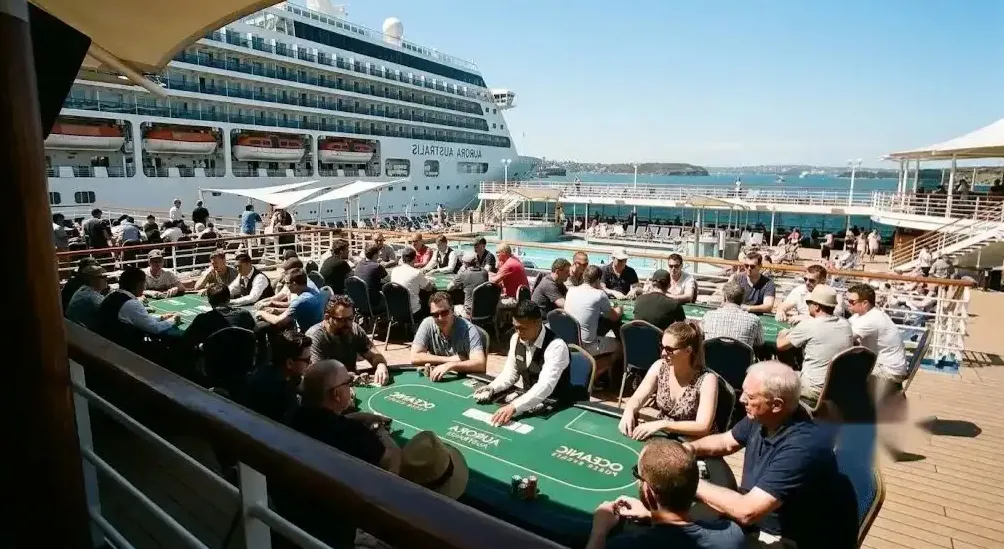
The chips arrive at the terminal forty hours before you do. Twenty-one dealer cases, each one opened, counted and re-sealed on a folding table in the boarding lounge while the tide goes out. It isn't glamorous. It isn't supposed to be — glamour is what's left once the counting's done.
The load-in nobody sees
Pacific Empress takes a full afternoon to dress. Felts go down first — fourteen of them, each inspected by hand for pulls and stains because a snag catches chips and dealers notice everything. Then chips, then buttons, then the little brass plaques that tell the rail which table is which. By the time the florist arrives at noon, the card room already looks inevitable.
The galley works its own schedule. Prep starts at 08:00 for a 19:00 service; the chefs plan the mid-tournament dinner break to the minute, because two hundred covers landing between blind levels wait for nobody.
The first hour
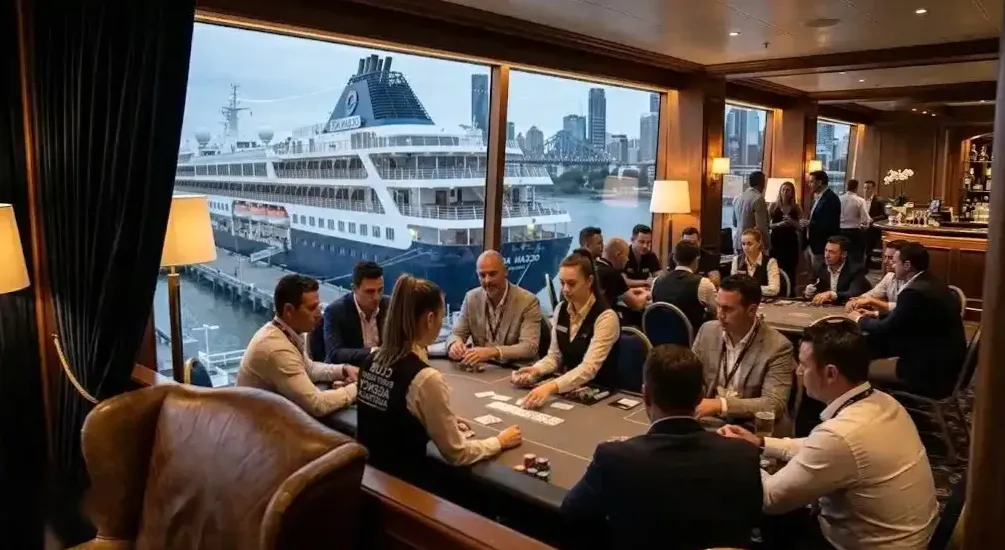
Guests board at six. The pit boss stands at the ballroom door and reads the room the way she'd read a table — who's confident, who's lost, who needs a dealer's attention in the first level rather than the third. The learn-to-play session runs at half past, and it's the most important twenty minutes of the night: nobody plays well while they're pretending they aren't new.
Deep into the levels
By the dinner break the field has found its shape. The floor team rebalances tables in the four minutes between level four and the first course — a small ballet of chip racks and table cards that guests experience as, at most, a dealer apologising for the wait that doesn't happen. The bubble, when it comes, is the loudest hour aboard. Dealers stop the clock table by table so every bust-out is witnessed properly; it matters for the structure and it matters more for the theatre.
The last table
The final nine move to the Sky Salon a little after eleven. The glass roof does the lighting; the rail does the noise. When the trophy crosses the foredeck at midnight, the dealers are already stripping the ballroom — fourteen felts rolled, twenty-one cases re-counted, and a load-out that ends somewhere past two in the morning.
You never see any of it. That's rather the point.
Two days of preparation back every six-hour evening
The coaching session is the most important twenty minutes aboard
Table rebalancing happens in the four-minute level gaps
The final table moves to the Sky Salon for a reason — the glass roof is the lighting rig
A good dealer is invisible for five hours and the centre of the room for four seconds — the ones that matter.
Senior dealer, Pacific Empress
On this topic
Experience it, don't just read it
Seats at our public evenings and private charters are open for the season.